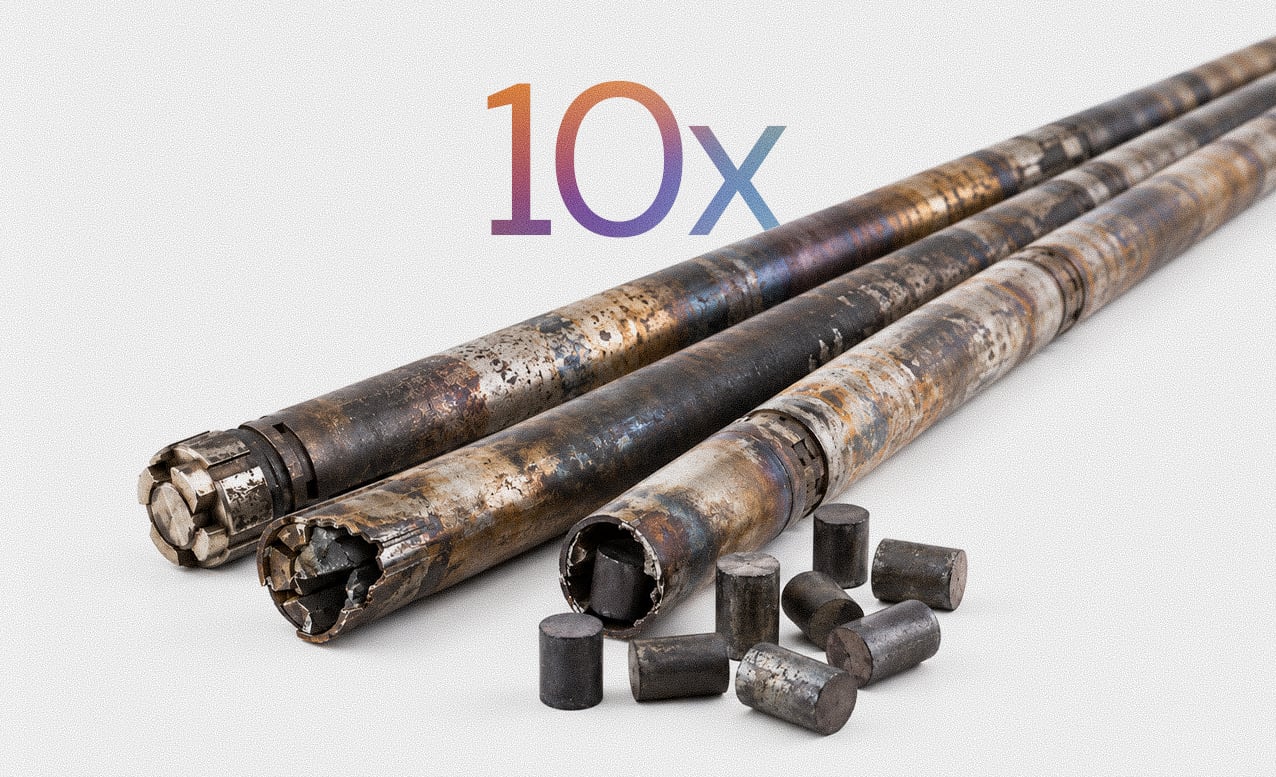
I’ve been asked several times by many people over the years, how can a country produce ten times more electricity from the spent nuclear fuel that the original reactors left behind? In this article I’ll explain how this is possible.
In most countries the reactors that are being used are light water reactors, which have a typical burnup of 20-60 gigawatt-days per metric (GWd/ton) ton of uranium metal. I want to emphasise that these numbers only apply to typical light water reactors; if we look at heavy water reactors such as CANDU and PHWR, or others in India, Canada, Romania, South Korea and the rest – the numbers differ significantly.
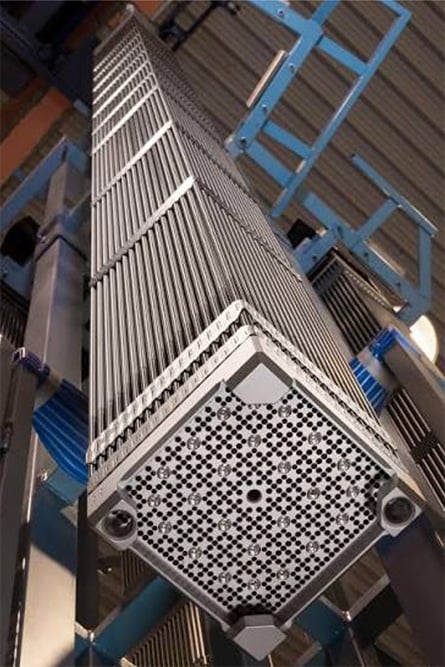
Westinghouse RFA2 fuel product
Light water reactors running at 1 gigawatt-electric generate approximately 1100-2000 tons of spent nuclear fuel over the course of 55 years, of which 1.1% is transuranics, which Copenhagen Atomics can use to start our reactors.
After recycling the spent nuclear fuel you’re left with 12-20 tons of transuranics (man-made heavy nuclear waste), to start each one it’s reactors Copenhagen Atomics only needs about 250 kilograms of it. From this 12-20 tons we can assume to kickstart 44 reactor units, each providing 42 megawatt-electric output (MWe). Each one of our reactor units runs for five years while breeding more fuel than they’re consuming. For our calculations we expect a fissile fuel doubling time of 16 years. We are able to only remove the extra fuel from our reactor units every 5 years and use this to kick-start extra reactors. With this timeline the fleet growth will look as such:
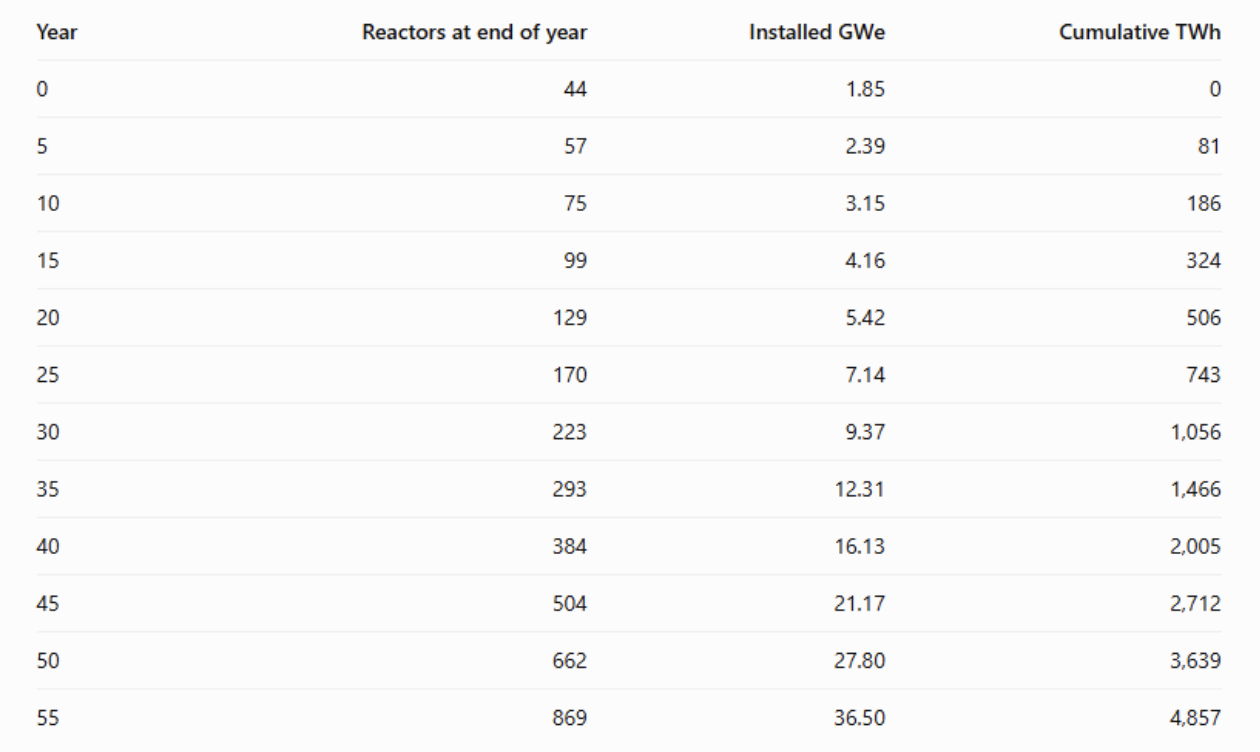
Following the table above, after 55 years we end up with a reactor capacity of 36.5 GWe; all kick-started on the 11 tons of transuranics extracted from spent nuclear fuel. If we sum up the electricity generated by this fleet of Copenhagen Atomics reactor units over these 55 years we end up at 4857 terawatt-hours (TWh) of electricity.
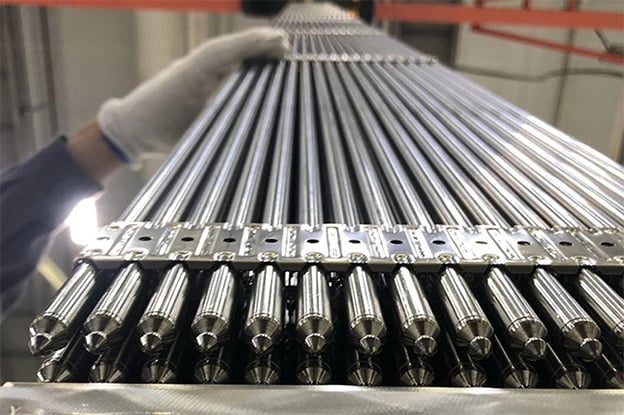
Close up photo of light water reactor fuel bundle.
Depending on the country and reactor design, light water reactors have a capacity factor between 70% and 95%. In the following calculations we assume a 90% capacity factor for a 1GWe light water reactor and therefore the generated electricity output over 55 years would end up at 433 TWh.
If we take this spent nuclear fuel from the light water reactor and separate it into four streams: Zircaloy, Uranium with 0.6-0.9% U-235, fission products and transuranics. The table below shows the commercial value of each of these streams.
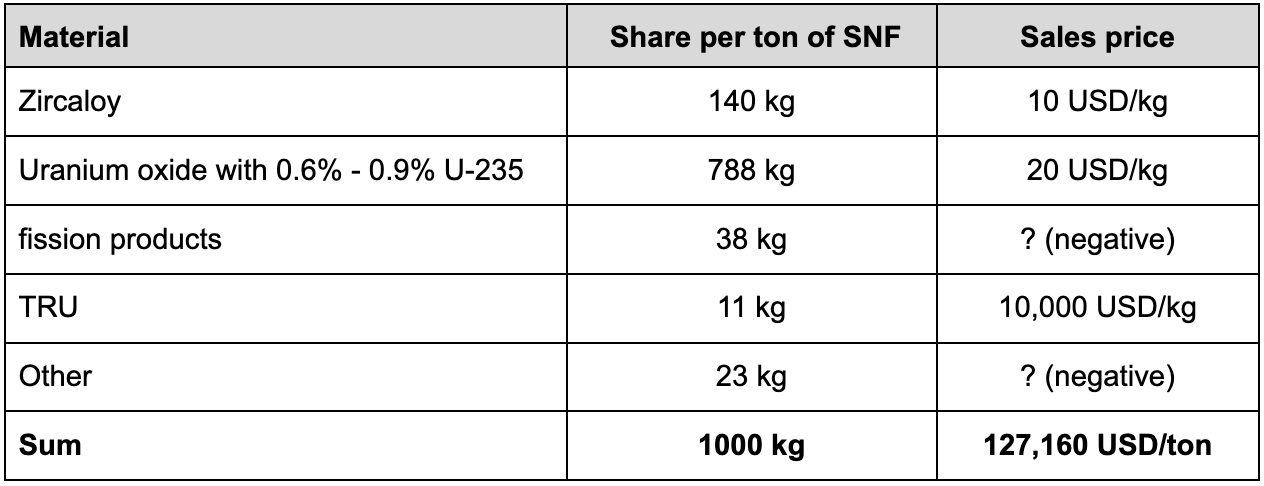
The cost for new fuel assemblies today is close to $5 million per ton depending on the design and country, back in the day when the current spent nuclear fuel was bought the cost was much lower at around $127,000. Other than the inflation for the US dollar, the fuel has not lost value.
If a country chooses to recycle their spent nuclear fuel, the previous sales price of $127,000 per ton would cover the cost of recycling assuming they sell their transuranics to Copenhagen Atomics. Over the following 55 years our reactor units can then create approximately ten times more energy than the first reactor that produced the transuranics did. No further uranium mining needed.
The only thing we need is thorium, which is available globally. Currently the cost of thorium is $50,000 per ton and to generate 4330 TWh of electricity we need 465 tons of it at a total price of $23 million.
On top of this, there is of course the cost of the Copenhagen Atomics reactor units and the power plant construction which is the majority of the project costs.
We can debate the numbers used in this article, some of them were on the lower end of the range, some others on the higher end due to the range given by physics. But all-in-all no matter how we adjust the numbers, the Copenhagen Atomics reactors started on transuranics will produce roughly ten times more electricity over the next 55 years compared to the original light water reactor.