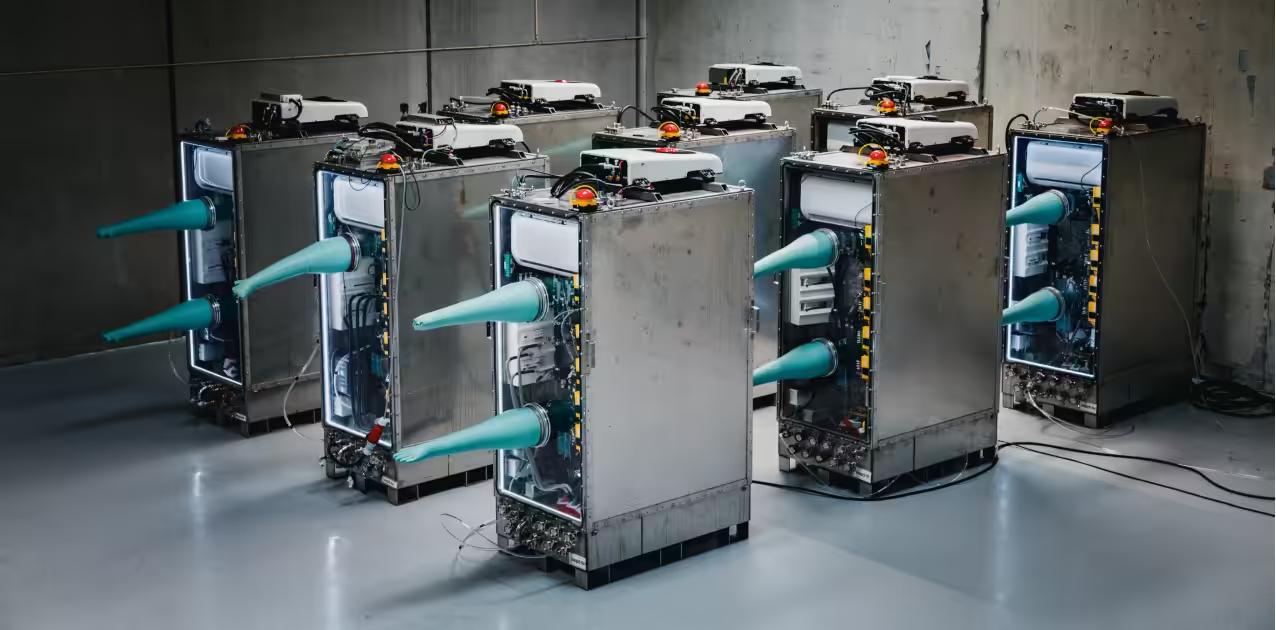

Pumped Molten Salt Test Loop

Molten Salt Loop Manufacturer

Molten Salt Loop Testing: Corrosion, Materials & Component Testing

The Copenhagen Atomics pumped molten salt loop includes control software with remote access through a mobile app. All operating data is automatically logged, stored in the cloud, and available for online viewing or CSV export through a secure customer login. Our engineers can also provide hands-on support during installation and commissioning at your facility.

Jesper Glahn
Jesper Glahn
Questions?

Loop version 5.6

Highlights
Fully integrated
test platform

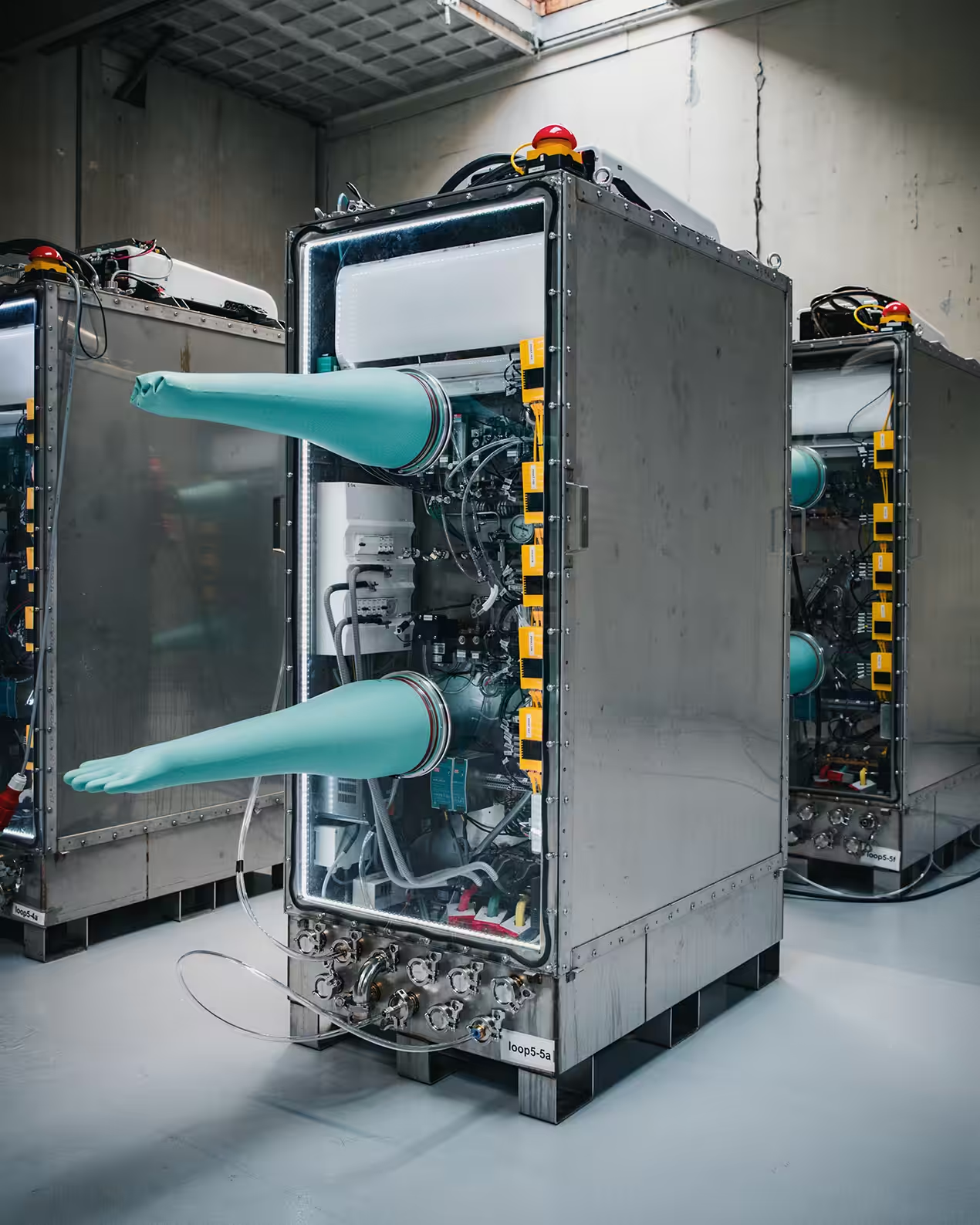
Fully integrated molten salt test platform running up to 600 °C integrated with our proprietary automated operation and alarm system and cloud data logging system.
Pumped Molten Salt Test Loop
High flow and
temperature

Loop operation up to 600 °C and flow up to 300l/min. Fully contained inside the loop cabinet.

Pumped Molten Salt Test Loop
Cloud data
interface

Cloud data acquisition/interface to process test data with other systems and data export feature.

Pumped Molten Salt Test Loop
Delivered and
tested by us

Delivered and tested with highly purified salt from Copenhagen Atomics.

Pumped Molten Salt Test Loop
Safe and
modular

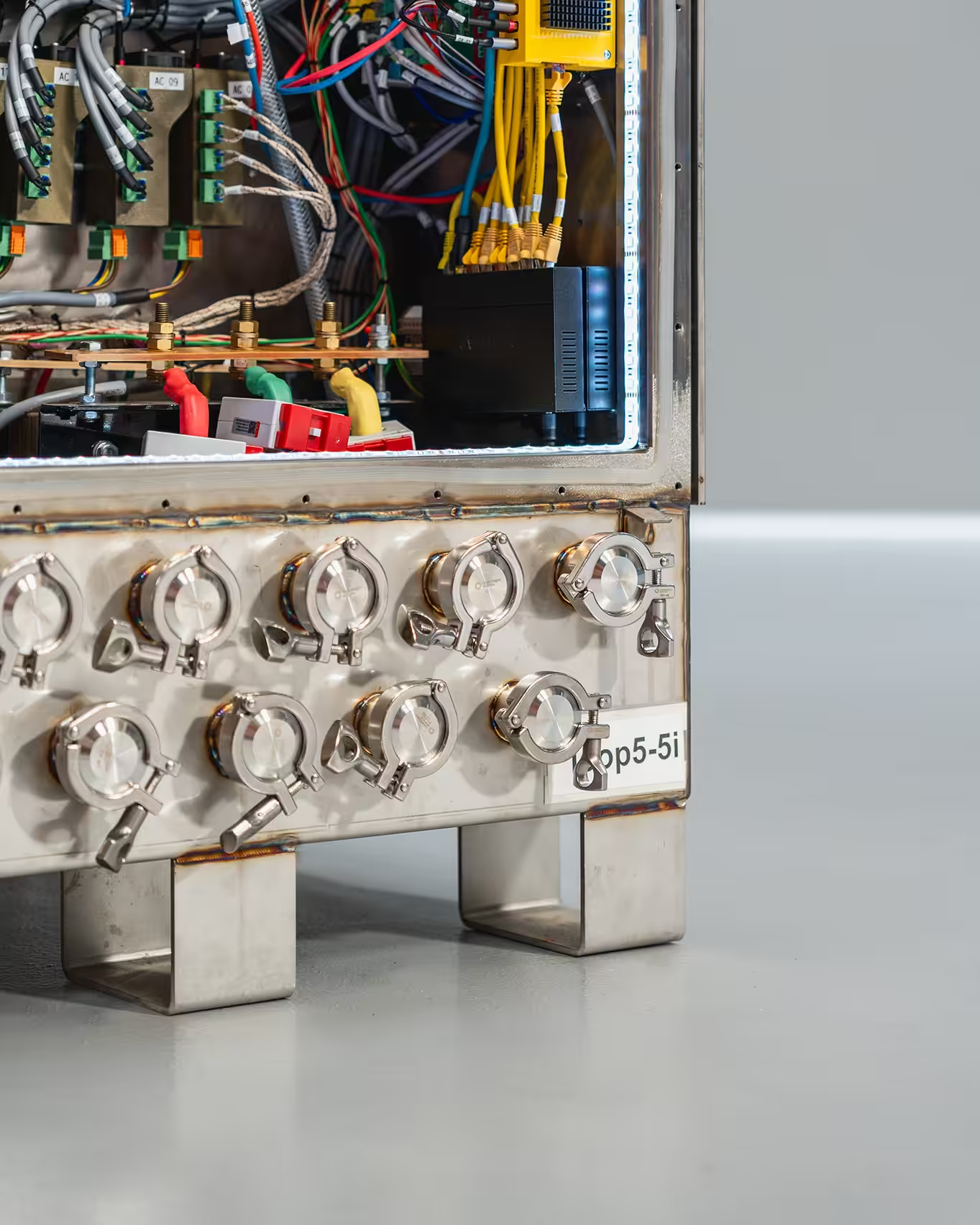
Comes with a double barrier safety concept and Ability to swap components and to customize test loop.

Pumped Molten Salt Test Loop
Rapid risk
reduction

Accelerates time scales and reduces project risks on science experiments and a versatile foundation for any molten salt experiments.

Pumped Molten Salt Test Loop

The molten salt test loop

Introduction

Copenhagen Atomics’ portable salt loop is designed as an accessible testing and development platform for researchers and engineers.

It’s the most complete molten salt loop testing platform on the market, already in labs at national nuclear research institutes, universities and advanced reactor companies on three continents.

The loop can be used to perform various experiments e.g. components testing such as tests of gaskets, flanges, filters, valves, pumps, pressure sensors, flow meters, and heat exchangers, etc., at a wide range of flow conditions, temperatures, salt composition, etc.

The loop is also well suited for material and chemistry experiments, e.g. salt material compatibility testing, graphite salt entrainment testing, corrosion testing, plate out, radiolysis, bobbling extraction of volatile compounds etc.

The ability to test materials, components and technologies at relevant dynamic conditions enables fast development and demonstrate the durability and feasibility required for approval. The loop is constructed in a modular fashion which enables the user to swap and connect different components.

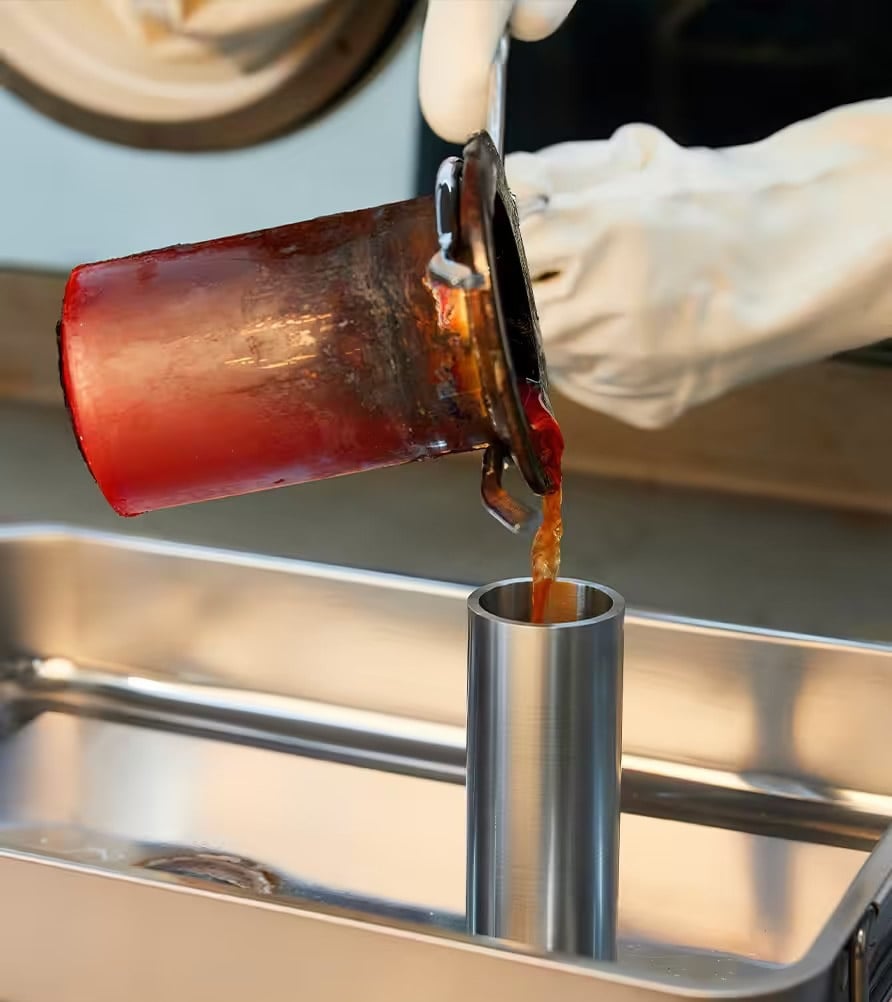
Each loop is constructed and tested with FLiNaK or another custom salt at the factory, by Copenhagen Atomics, before shipping.

THE HARDWARE

Features

The loop supports prototype validation, long-duration molten salt corrosion testing, molten salt materials testing of alloys and ceramics, and full component testing of pumps, heat exchangers, valves and sensors at real operating conditions.

Components such as gaskets, flanges, filters, valves, pumps, pressure sensors, flow meters, and heat exchangers, etc. can be tested in a dynamic molten salt environment.

Loop furnace

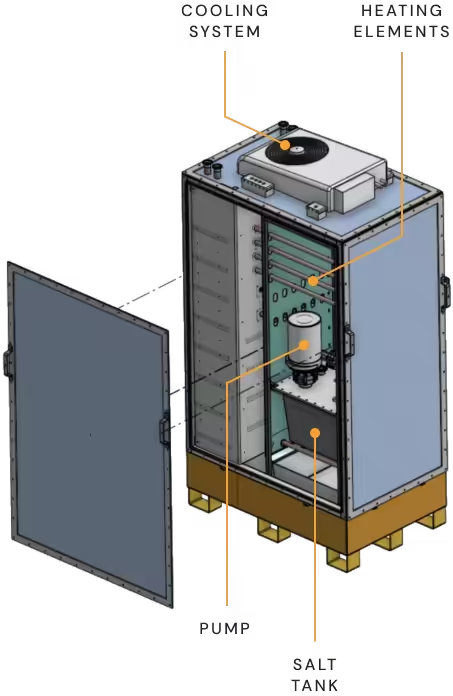
The internal volume of the loop’s furnace is approximately 350 liters and have been tested up to 600˚ Celcius. Depending on the configuration, about half of this volume is available for customization to suit various experiments and test.

A versatile test platform

A versatile test platform
The salt circulates from the salt tank via the pump and back, completing a loop. The piping is equipped with salt pressure sensors, flow meter, bypass filtration, valves, and can be customized to house other equipment, such as sample chambers, salt heater, salt heat exchanges, etc.

The salt tank contains 25L of molten salt that can be FLiNaK or another fluoride or chloride salt.

Pumped portable molten salt loops
  • Pumped portable molten salt loops
  • Pumped portable molten salt loops
  • portable molten salt loops
  • portable molten salt loops
THE SOFTWARE

Extensive software

features available

Significant value in a Copenhagen Atomics pumped loop is the hardware and the high quality salt. The rest is the software and the data handling

WebUI

The test loop is operated by a mobile phone or a computer via a web interface. Ability to start, stop and run scripts, and to adjust temperatures and pump speed. Unique login with assigned privileges for each loop user. This is also where you update software, firmware and scripts and change the naming of your sensors and set alarms.

PlotsUI

The test loop is operated from a mobile phone, tablet or computer through a web interface. Users can start and stop experiments, run scripts, adjust temperatures and pump speed, update software and firmware, configure sensors, and set alarms. Each user has a secure login with assigned permissions. All test data is logged to the cloud, making both live and historical records available from any web browser or for download as CSV files.

Download: Loop Datasheet

A more technical and in-depth document

Interested in our molten salt test loops? Contact our team to discuss your testing requirements.
Interested in our molten salt test loops? <em>Contact our team to discuss your testing requirements.</em>

Get in touch

You will receive a confirmation email right away, followed by regular updates.

Please fill out your name
Please add valid e-mail
Please fill out your message

Molten Salt Test Loop FAQ

What is the size of the machine (loop)?

Version 5.6 is 120x80x215 cm (47x31x85 inches), it cannot stand up against a wall or other equipment when it is operating. You need a minimum 20 cm space around the loop in order for the heat to dissipate. If you place it only 20 cm from a wall, then you must check that the wall material can handle the heat. See the datasheet for more information. Depending on your lab configuration you may also need space for a cold trap to remove moisture from the loop, a water chiller to keep the electronics cabinet cold and an argon pressure bottle if argon is not available from your lab piping. You may also need a transformer to convert your voltage to European voltages. See other questions below about voltages.
The loop can be rolled on a pallet pusher through most doors and into elevators.

By default the loop uses a 32 Amp, 350 – 420 Volt, 3 phase European CEE connector. It can run on 45 – 65 Hz. American customers typically buy a transformer, which is readily available to step down American 480 Volt industrial supply.

The loops we sell in Europe come with CE marking. You can ask for our certification of conformity. For the US market, these are optionally fitted with UL approved cabling and electronics.

Several of our customers use the loops as pumping stations, where they pump salt through some external equipment. Because molten salt compatible pumps are not readily available many of our customers simply use our loops as a pumping station. By using internal pneumatic adjustable salt valves, it is possible to adjust how much flow one wish to pump around in the internal loop inside the loop furnace or adjust a certain flow to go out through an external pipe assembly e,g, with reheaters, heat exchangers, measure equipment and more.

Yes you can connect two loops, each on a separate scale and in this way make very accurate flow measurements through the pipe connections

The loop can deliver a maximum pressure around 2 bar. Depending on the type of salt it can reach 5 meters maximum pumping height. FLiNaK salt has a density around 2.2 depending on the temperature. Uranium and thorium salts have densities above 4 kg/liter. Most of the salts we use have a high change in density and viscosity with change in temperature.

Copenhagen Atomics molten salt test loops come with control software which can be controlled from a webbrowser and the data recorded are also available in real time web data plots. You can control it from your computer or mobile phone as long as it is connected to the same LAN (WiFi) as the loop. Simple new commands can be set up within a few hours. The control software can also interface with other equipment. But this typically requires help from our integration engineers.

There are a number of ways to interface. The simplest is to get data out of the loop by using SignalR (a https protocol for near real type data reception). It is also possible to interface with Ethernet or RS485 or USB or 0-5V or 4-20mA typical industrial interfaces.